
The Kakeibo Budget Method: The Japanese Art of Mindful Saving
Tired of complicated budgeting apps? Discover how Kakeibo, the Japanese art of mindful money tracking, stops impulse spending and builds calm savings habits.
Guilt-Free Spending Allowance
Calculate your daily and monthly guilt-free spending pool using the Kakeibo formula.
Have you ever felt completely burned out by modern budgeting apps?
You download a shiny software tool, link your debit cards, and spend two hours setting up notifications. For the first four days, everything feels high tech and organized.
Then reality sets in.
Push alerts buzz your phone during work meetings. The software mislabels your grocery run as home improvement. Red warning banners scream that you went four dollars over your coffee limit. By week three, alert fatigue wins. You silence the notifications, hide the app in a phone folder, and return to guessing how much cash remains in your checking account.
If that cycle sounds familiar, you do not need another algorithm. You need intention.
More than a century ago, a Japanese woman named Hani Motoko created an antidote to mindless spending. It requires no software, no bank passwords, and no subscription fees.
It is called Kakeibo.
What Is the Kakeibo Budget Method?
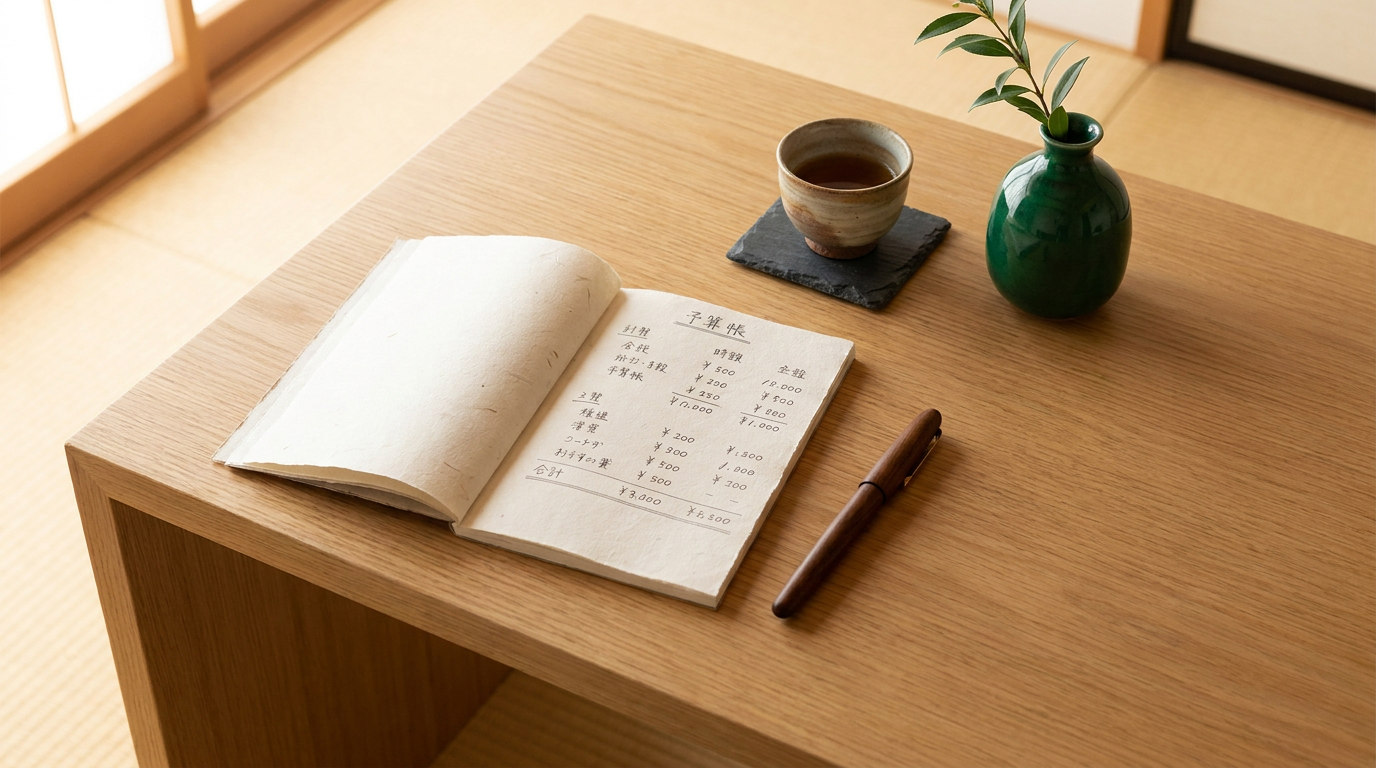
Kakeibo, pronounced kah keh boh, translates from Japanese as household financial ledger.
Created in 1904 by Hani Motoko, Japan first female journalist, Kakeibo was designed to help women take control of their domestic finances. Motoko believed that financial stability was the foundation for personal freedom and peace of mind.
Unlike Western budgeting systems that treat money purely as a math puzzle of rigid percentages, Kakeibo treats spending as a mindfulness practice.
The philosophy behind Kakeibo is straightforward: when you slow down and physically record your cash flow, you bridge the gap between your emotions and your wallet.
You stop reacting to marketing messages. You stop buying items out of boredom. Most importantly, you develop a calm, confident relationship with your money.
Why Pen and Paper Beats Another Screen
In our digital era, spending money has become almost completely frictionless.
You swipe a piece of plastic, tap a smartwatch on a payment terminal, or click a single button on a shopping website. The money vanishes instantly from your bank, but your brain barely registers the loss.
When you do not feel the loss of money, impulse buying runs wild.
Kakeibo uses friction as a protective shield.
By writing every single purchase down by hand in a notebook, you create a deliberate pause. Neuroscience shows that physical handwriting engages motor memory and emotional processing in ways that tapping a screen never can.
When you write down that you spent eighteen dollars on a fast food lunch that left you feeling sluggish, you confront the transaction directly. The physical act of holding a pen forces you to acknowledge your choices without judgment.
The Four Core Pillars of Kakeibo Spending
Traditional budgets often overwhelm people with thirty distinct subcategories. Kakeibo strips away the clutter and organizes all discretionary spending into four simple pillars:
1. Survival (Needs)
These are the non negotiable items required to live your everyday life.
- Grocery staples and cooking supplies
- Rent, mortgage, and essential utility bills
- Basic transportation, public transit passes, or gas
- Prescription medications and healthcare costs
2. Optional (Wants)
These are purchases you enjoy but do not require for physical survival.
- Restaurant meals and takeout dinners
- Morning coffee runs and bakery pastries
- New clothing purchases beyond basic needs
- Leisure shopping and entertainment subscriptions
3. Culture (Enrichment)
This is where Kakeibo shines brighter than almost any other budget framework. Most budgeting philosophies view all non essential spending as a flaw to eliminate. Kakeibo recognizes that personal growth, curiosity, and cultural enrichment are essential for a good life.
- Books and audiobooks
- Museum admissions and theater tickets
- Music, concerts, and community performances
- Educational courses, craft workshops, and hobby supplies
4. Unexpected (Extras)
These are irregular or sudden expenses that arise during the month.
- Urgent medical or dental visits
- Emergency car repairs or home maintenance
- Sudden travel for a family emergency
- Unplanned wedding or birthday gifts
Separating Culture from generic Wants is a profound shift. It allows you to fund your intellect and personal development proudly while cutting out mindless consumer clutter.
How to Run Your Monthly Kakeibo Cycle
The Kakeibo method follows a rhythmic four step cycle each month. All you need is a basic notebook, a pen, and fifteen minutes of quiet time.
Step 1: Record Your Fixed Cash Flow
At the start of the month, open your notebook to a clean page. Write down two numbers:
- Your Net Income: All predictable income landing in your accounts this month.
- Your Fixed Expenses: Rent, insurance, loan payments, and baseline bills that stay the same every month.
Subtract your fixed expenses from your net income. The number remaining is your gross cash pool for the month.
Step 2: Set Your Savings Target First
Most people budget backwards. They spend money throughout the month and promise to save whatever scraps remain on the final day. Usually, nothing remains.
Kakeibo reverses this habit. Before you allocate a single dollar to discretionary spending, decide how much money you want to save this month.
Write that savings number down in your notebook. Transfer that cash directly to your savings account or investment portfolio on payday.
If you want to know how much cash you can safely spend after funding your priorities, check your numbers with our free Guilt Free Spending Allowance. It calculates your safe spending limits in seconds.
Step 3: Determine Your Weekly Spending Pool
Now take your remaining cash:
Income minus Fixed Bills minus Target Savings equals Monthly Spending Pool
Divide that total by four to establish your weekly spending allowance. This is the pool of money that covers your Survival groceries, Optional treats, Culture enrichment, and Unexpected surprises.
Step 4: Track Daily and Reflect at Month End
Keep your notebook on your bedside table or desk. Every evening, spend two minutes writing down what you spent that day. Place each expense under its proper pillar.
At the end of each week, sum the columns to see where your money flowed.
At the end of the month, sit down for a quiet twenty minute review. This reflection is where financial growth actually happens.
The Four Reflection Questions
At month end, you do not just calculate totals. You answer four gentle reflection questions in your journal:
Question 1: How much money do you have?
Review your actual take home earnings for the past month. Did your income match your expectations, or did overtime or freelancing create a surplus?
Question 2: How much money did you save?
Compare your actual savings to the target you wrote down at the start of the month. Did you leave your savings untouched in your vault?
Question 3: How much money did you actually spend?
Add up the four pillars: Survival, Optional, Culture, and Unexpected. Which pillar claimed the largest portion of your discretionary pool? Were there surprises in your Optional spending?
Question 4: How will you improve next month?
This is the heart of Kakeibo. There is no shame, no guilt, and no self punishment. If you overspent on takeout meals because you were working late, write it down honestly.
Then set one practical goal for next month: "Next month, I will keep frozen meals in the freezer so I do not order delivery when I am exhausted."
Small, thoughtful adjustments compound into massive wealth over time.
The Kakeibo Pause: Five Questions Before You Buy
Impulse spending is the primary destroyer of personal savings. When you feel a sudden urge to buy something online or in a shop, use the Kakeibo Pause.
Put the item down and ask yourself these five questions:
- Can I live comfortably without this item?
- Based on my current financial situation, can I truly afford it in cash today?
- Will I actually use this item next month, or will it gather dust in a closet?
- Do I have the physical space to store and care for this item properly?
- What is my emotional state right now?
That fifth question is the most revealing. Are you buying this item because you truly value it, or are you tired, stressed, lonely, bored, or seeking a quick dopamine hit after a hard day at work?
If you are debating a significant purchase, try our Work Hours Price Converter. It converts the price tag into the exact number of hours you must work to pay for it. Seeing an impulse buy in hours of labor will instantly clear your mind.
Comparing Budgeting Philosophies
To understand why Kakeibo resonates with so many people today, look at how it compares to other popular frameworks:
| Feature | The Kakeibo Method | Automated Budget Apps | 50/30/20 Rule |
|---|---|---|---|
| Tools Required | Simple notebook and pen | Smartphone app and bank links | Spreadsheet or calculator |
| Primary Focus | Emotional mindfulness and habits | Passive transaction tracking | Fixed mathematical percentages |
| Setup Time | Five minutes | One to two hours syncing accounts | Thirty minutes |
| Burnout Risk | Low, calm and reflective | High, alert fatigue and sync errors | Moderate, rigid percentage constraints |
| Approach to Joy | Dedicated Culture pillar for growth | Bundled with all wants | Mixed into 30% wants bucket |
| Impulse Control | High, handwriting builds friction | Low, passive alerts happen after spending | Medium, requires tracking categories |
Connecting Kakeibo to Long Term Financial Freedom
Kakeibo is not just a tool for surviving the current month. It is a stepping stone to lasting independence.
When you cut out mindless purchases that bring no real joy, your savings rate climbs naturally. You do not feel deprived because you are actively funding Culture and personal enrichment.
Over five to ten years, those saved funds generate significant compounding returns.
If you want to see how a higher monthly savings rate accelerates your early retirement timeline, run your projections through our Freedom Date Countdown. You will see the exact year and month you can step away from mandatory work.
Practical Checklist to Start Kakeibo Tonight
You do not need to buy an expensive Japanese planner to start. Grab any notebook you have at home and follow this simple launch plan:
- Find a clean notebook and a pen you enjoy writing with.
- On page one, record your net monthly income and fixed essential bills.
- Choose a realistic savings target for the month and transfer it immediately.
- Draw four columns on the next page: Survival, Optional, Culture, and Unexpected.
- Set your notebook on your desk and commit to writing your daily totals each evening.
- Schedule a twenty minute calendar reminder on the last day of the month for your reflection questions.
Calm Finances Start with Simple Habits
Living on a budget does not mean suffering through spreadsheets or feeling guilty every time you buy a cup of tea.
By slowing down, writing your expenses by hand, and honoring your emotional needs, Kakeibo gives you complete control over your money.
Start your notebook tonight. When you treat your money with mindfulness and respect, financial peace follows naturally.
Disclaimer: This guide is provided for educational and informational purposes only and does not constitute individualized financial, investment, tax, or legal advice. Always consider your personal financial circumstances before making significant money management decisions.
Written by EasyBudget Editorial
Fact-Checked • 2026 EditionOur editorial team develops free, privacy-first personal finance calculators and independent money management guides. We cross-reference all math against federal savings guidelines and macroeconomic benchmarks.